
Founders
We Didn't Choose Hospitality. It Chose Us.
5 minutes
June 1, 2026
Alexandros and I grew up on opposite sides of the world. Him in Cyprus, and I in the Dominican Republic. Our paths crossed on the rowing team at Columbia University, where we bonded over cultural similarities and a shared interest in hotels.
Full disclosure: prior to building Anana, the most exposure we had to the service industry was when we worked as baristas in NYC, Santo Domingo, and Limassol. However, countless hours of working onsite with hoteliers have taught us that we naturally embody the spirit of Unreasonable Hospitality, and that this is the industry we should have been in all along.
We come from countries where tourism is a major economic driver. Hotels have provided our communities with jobs, education and a platform to share our cultures with the world. We were born into these environments, therefore, we understand that being service-oriented is the pillar that will keep pushing this industry forward. Therein lies the core of hospitality, and therein lies the core of Anana.
How we got started
We went through Y Combinator's Spring 2025 batch with Cleon, an AI system designed to help software implementation teams handle complex data migrations. After months of building and talking to customers, we realized we were not the right team to help solve this problem, so we decided to pivot.
During this time, we noticed a shift in the quality of voice AI. These technologies were improving at a rapid pace and we became intrigued by companies like Avallon, who were using voice agents as an anchor to create something bigger. We realized then that voice AI could have a real impact in our home economies, and if this was the goal, then the obvious place to start was the biggest economic driver: hospitality. That realization sent us searching for answers.
The discovery phase
To automate phone calls for hotels, we needed two things:
- An understanding of these technologies at their limits — where they worked, where they broke, and what made them useful in the real world
- Hotels (hint: we do not own any, so we had to get creative)
While we figured out how to approach the latter, we knew we could make progress on number 1. We walked hundreds of blocks across NYC selling voice agents to small businesses. At our peak, we worked with nutritionists, restaurants, gyms, roofing companies, and even an immigration-filing business in Upper Manhattan.
We spent hours on-site observing customer interactions and manually testing agents. In doing so, we developed a much deeper understanding of what businesses could gain from AI. It also became very clear that voice agents alone would not be enough. After enough reps, we knew it was time to move on to our ultimate target, so we dove headfirst into hotels.
How we broke into hospitality
Those months on the ground taught us that the phone call automation was only the entry point, and that the real value lay in what the conversations revealed. Every interaction contained information the business owner never had structured access to before: why customers were calling, what they were confused about, where they were dropping off. We started to wonder what that signal would look like at scale, inside an industry built entirely on guest relationships.
So we went and found out. We started with the usual outbound tactics — email, LinkedIn, cold calling. After 50 or so meetings, we knew that we had to go beyond the screen because the most valuable conversations happen on-property.
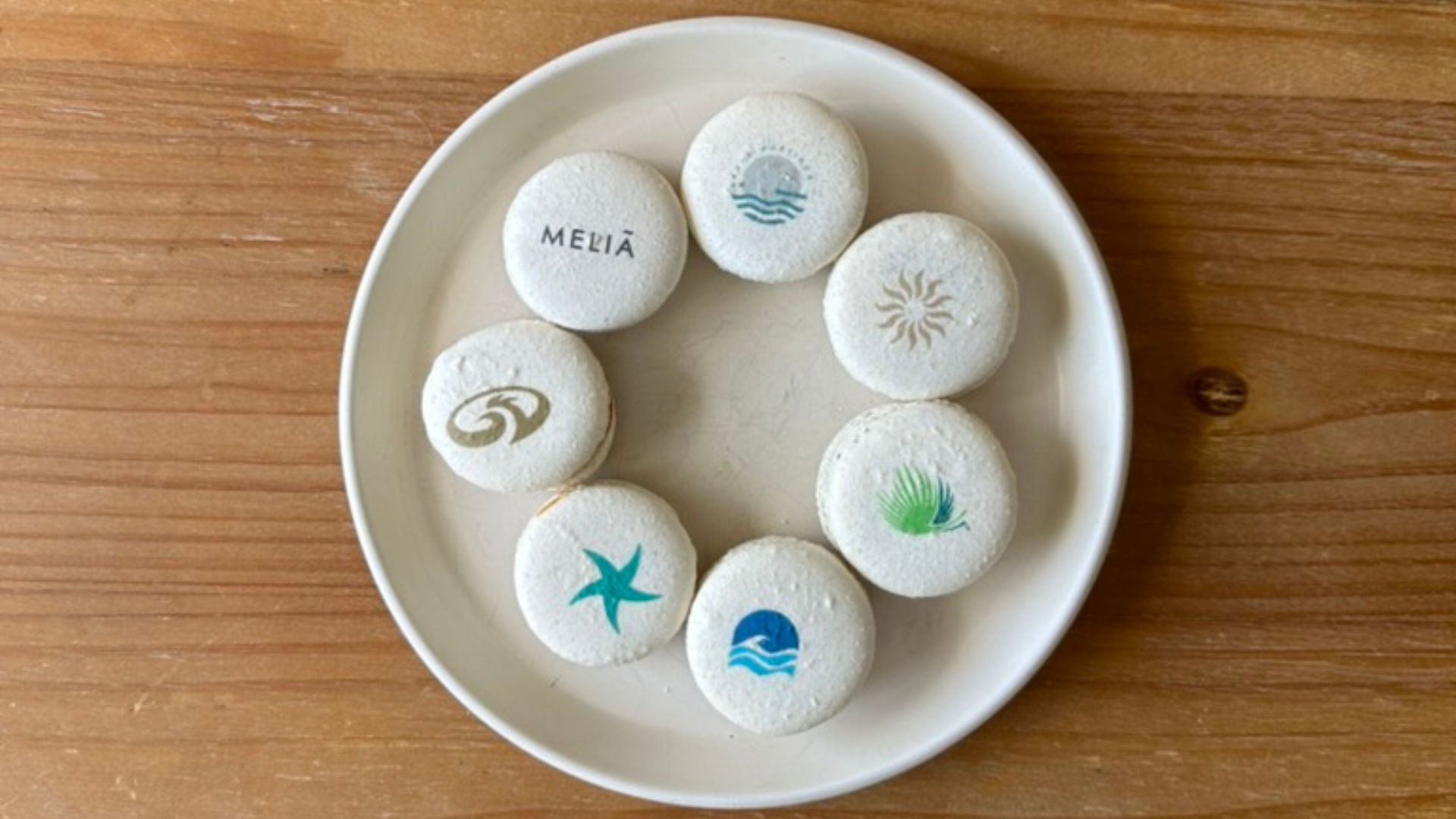
So what did we do? In true YC-fashion, we did things that didn't scale. We made 450 custom macarons and started hand delivering them across the world. Each set of macarons delivered had a hotel group's logo on the front, a QR code on the back that led to our website, and a hand-written note.
We made a list of people at 30 hotel groups that we wanted to talk to, and just started showing up. We were unapologetically interrupting people's days because we felt the urgency to share this newfound information with them.
After a few months of doing this, we hustled our way into our first portfolio: ~1,100 keys across five resorts in the Mediterranean.
Let's chat!
If you work in hospitality or are curious about what we are building or just want to swap notes on the industry, we would love to hear from you. You can send me a note at ricardo@getanana.com or book a quick call here.
Get notified whenever we post
No spam. Just new articles when they go live.